
August 2026

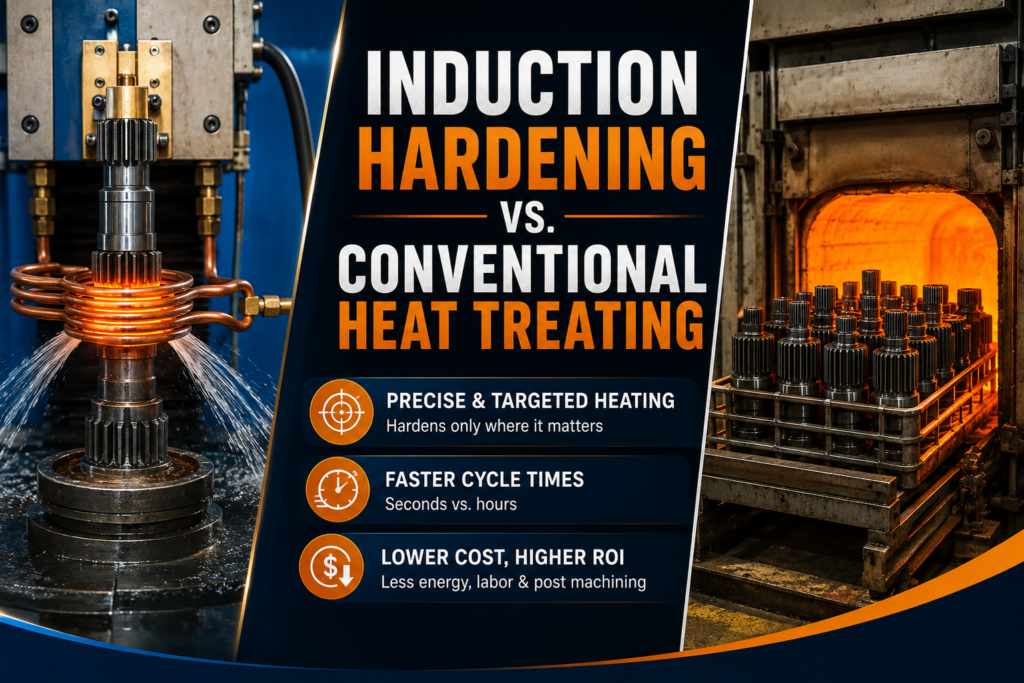
Induction hardening vs conventional heat treating

Induction Hardening vs. Conventional Heat Treating: Process, Advantages, and ROI

Modern manufacturing plants, heat-treatment facilities, and precision machining shops constantly search for methods to boost component durability while trimming operational overhead. When evaluating methods to strengthen carbon steel, alloy steels, and ductile iron parts, plant managers and metallurgical engineers inevitably face a critical operational decision: Induction Hardening vs. Conventional Heat Treating. Traditional thermal processing technologies—such …

Induction Hardening vs. Conventional Heat Treating: Process, Advantages, and ROI Read More »
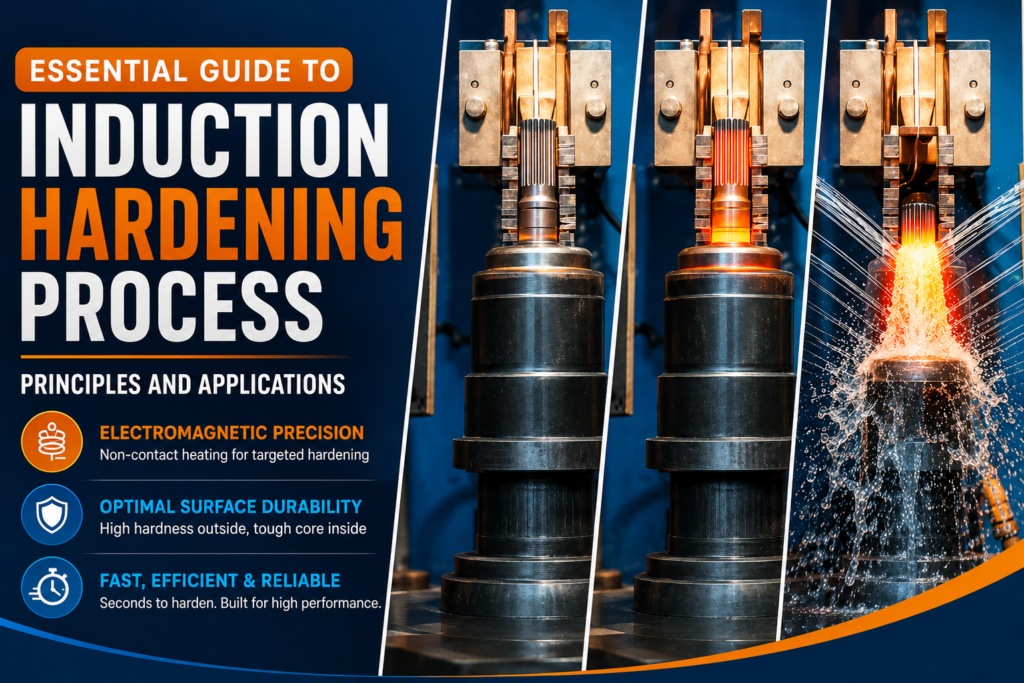
Induction Hardening Process

Essential Guide to the Induction Hardening Process: Principles, Technology, and Applications

Modern manufacturing demands metal components that can withstand extreme friction, heavy repetitive loads, severe mechanical impact, and harsh operating environments. Critical assemblies such as automotive transmission gears, drive shafts, engine crankshafts, heavy-duty bearings, and industrial rollers require exceptional surface durability and wear resistance while retaining a tough, ductile core to prevent sudden structural failure. The …

Essential Guide to the Induction Hardening Process: Principles, Technology, and Applications Read More »

Scroll to Top