blog

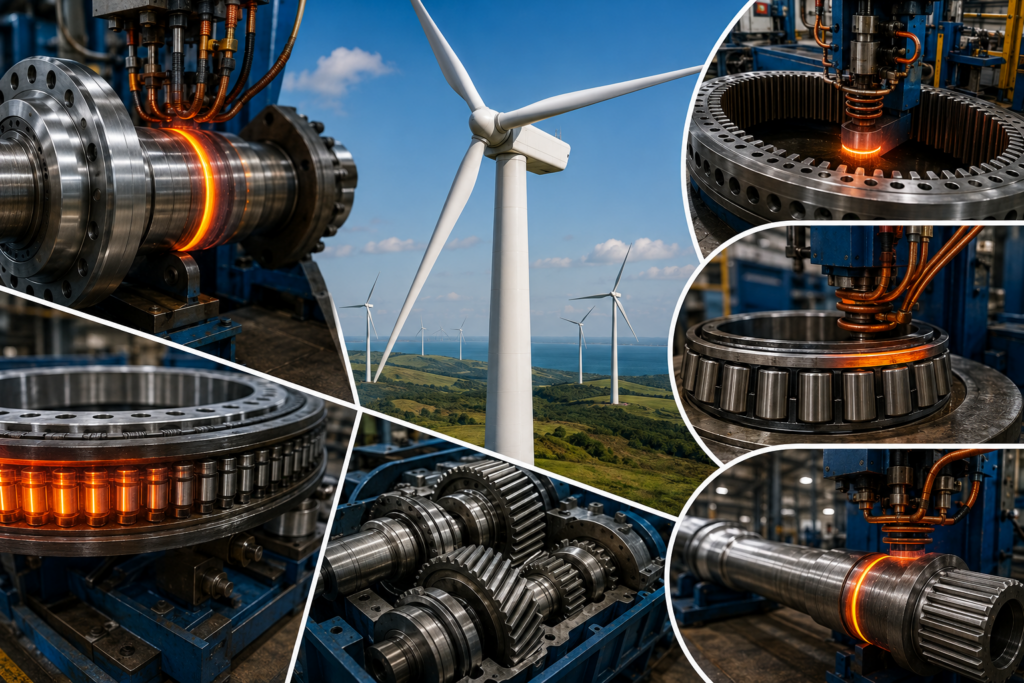
Wind turbine assembly and manufacturing process

Induction Hardening for Wind Energy: Why It’s the Backbone of Turbine Reliability

A wind turbine is expected to operate continuously for 20–25 years — through storms, temperature extremes, and millions of load cycles — with minimal maintenance access, often hundreds of meters offshore or in remote locations. When a critical component fails, the cost is not just the part: it’s the crane mobilization, lost energy production, and …

Induction Hardening for Wind Energy: Why It’s the Backbone of Turbine Reliability Read More »

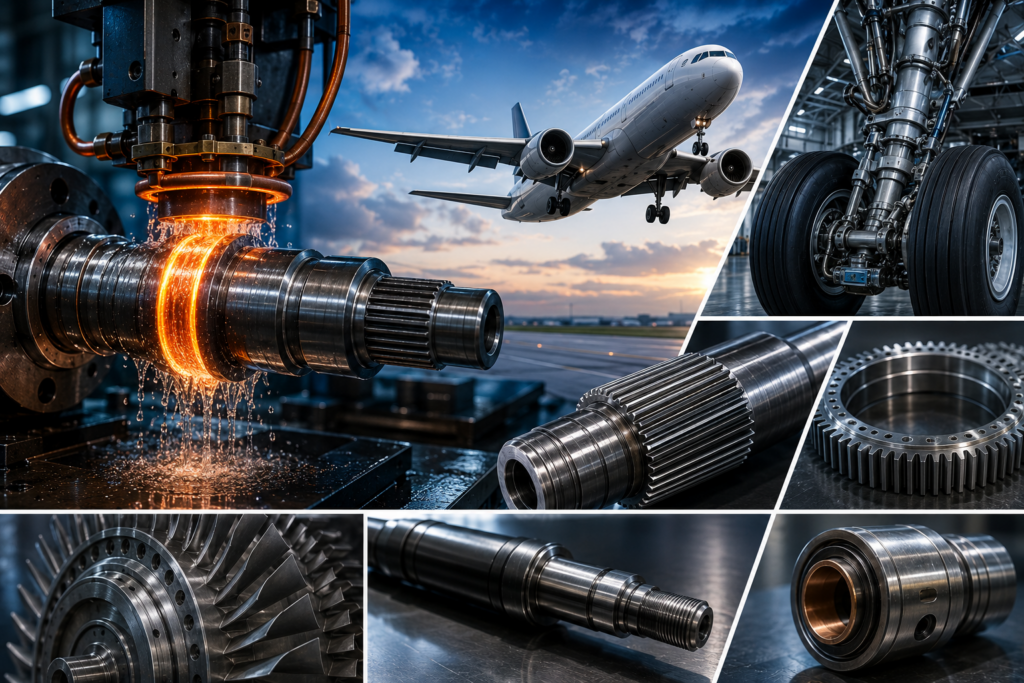
Aerospace manufacturing in high detail

Induction Hardening for the Aerospace Industry: Precision, Compliance & Component Longevity

In aerospace manufacturing, there is no margin for error. A single under-hardened landing gear component, a fatigue crack in a turbine shaft spline, or a worn actuator rod can have consequences that go far beyond a warranty claim. Aerospace procurement managers and plant managers operate in an environment where component reliability is not a target …

Induction Hardening for the Aerospace Industry: Precision, Compliance & Component Longevity Read More »

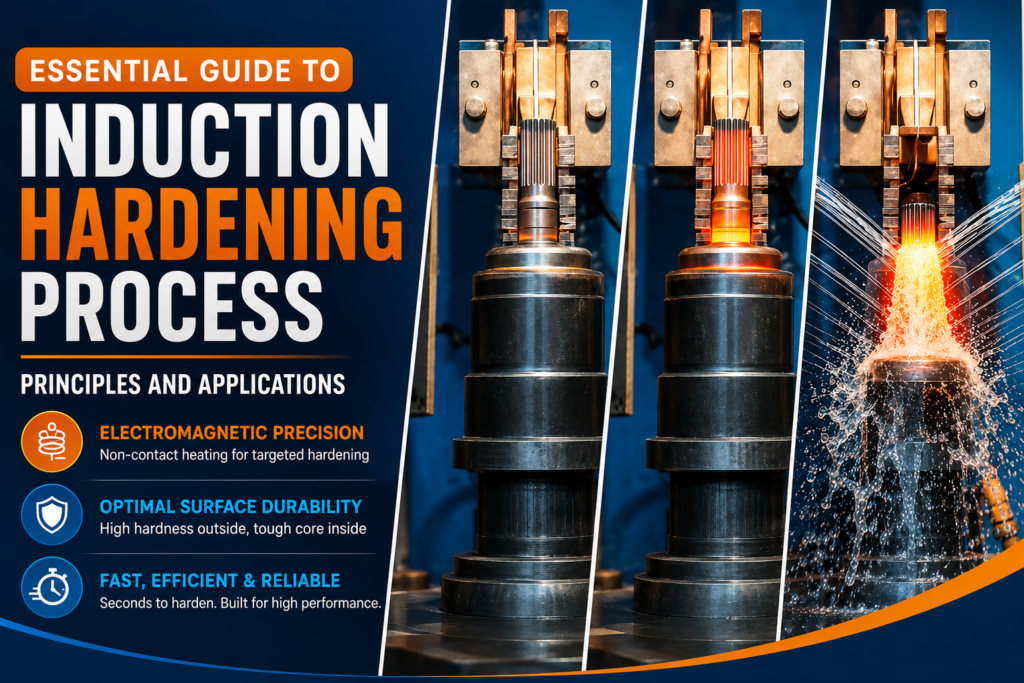
Induction Hardening Process for Industrial Components – Complete Industrial Guide

The Induction Hardening Process for Industrial Components is one of the most advanced heat treatment techniques used in modern manufacturing industries. It enhances surface hardness, improves wear resistance, and increases the operational lifespan of critical machine parts. Industries such as automotive, heavy engineering, railways, aerospace, and construction equipment rely on induction hardening to achieve superior …

Induction Hardening Process for Industrial Components – Complete Industrial Guide Read More »

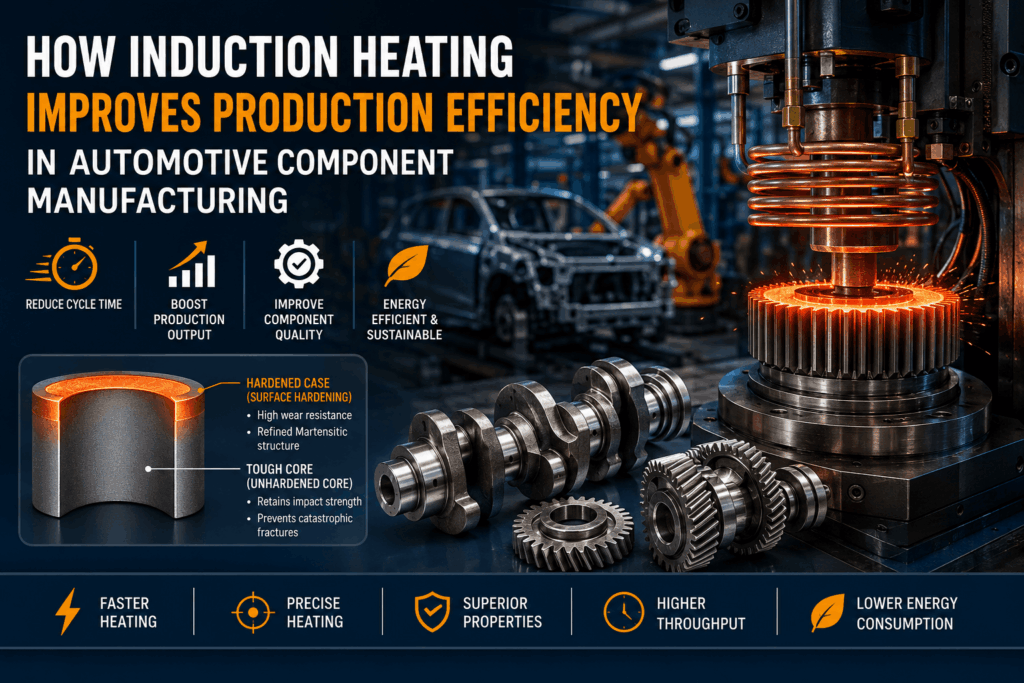
Energy Saving Benefits of Induction Heating in Metal Industry (Complete Industrial Guide)

The Energy Saving Benefits of Induction Heating in Metal Industry are becoming a major reason why manufacturers are rapidly shifting from conventional heating methods to modern induction technology. With increasing electricity costs, environmental regulations, and demand for higher production efficiency, industries are constantly looking for heating solutions that reduce energy consumption while improving productivity. Induction …

Energy Saving Benefits of Induction Heating in Metal Industry (Complete Industrial Guide) Read More »

Induction Heating for Wind Energy: Powering Stronger, Longer-Lasting Turbines

The global shift toward renewable energy has placed wind power at the forefront of sustainable electricity generation. As wind turbines grow larger and more powerful, the demand for robust, high-performance components has intensified. At the center of this evolution is induction heating for wind energy—a precision-driven manufacturing process that enhances durability, efficiency, and lifecycle performance …

Induction Heating for Wind Energy: Powering Stronger, Longer-Lasting Turbines Read More »

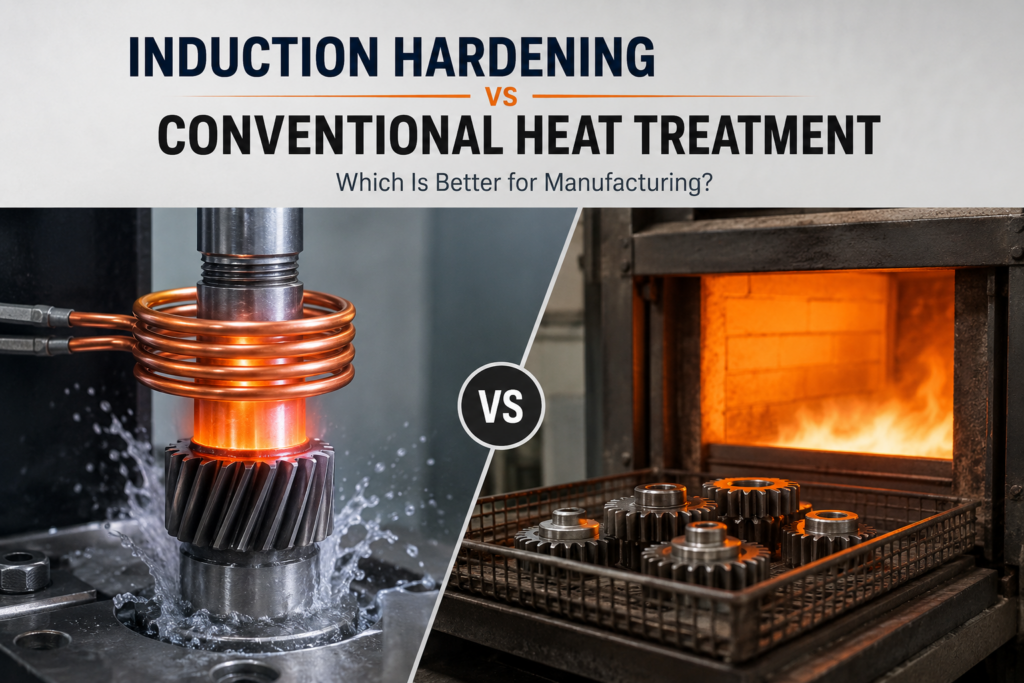
Induction Hardening vs Flame Hardening vs Case Hardening: Which Heat Treatment is Best?

Induction vs Flame vs Case Hardening: Complete Guide for Engineers & Manufacturers Introduction to Induction vs Flame vs Case Hardening In modern metallurgy and industrial manufacturing, selecting the right surface hardening technique can directly impact product performance, durability, and cost efficiency. Among the most widely used methods, the comparison of Induction vs Flame vs Case …

Induction Hardening vs Flame Hardening vs Case Hardening: Which Heat Treatment is Best? Read More »

Scroll to Top